Decide what “confident” means in this situation
A presentation, a first meeting, and a relaxed dinner do not ask for the same outfit. Before choosing clothes, name the impression you want: prepared, approachable, expressive, or composed. These are useful styling intentions, not properties that a color automatically gives you.
Check the setting and any dress code first. In an unfamiliar workplace, an outfit close to the expected level of formality is often an easier starting point than a dramatic statement. For a creative social event, a distinctive color or silhouette may feel more like you.
Remove the need to keep adjusting your clothes
Try the full outfit with the actual shoes and layers. Sit, walk, reach for a bag, and move your arms as you would when talking. Notice anything that pulls, slips, pinches, or needs constant attention.
Choose the version that lets you concentrate on the occasion. That may mean a softer jacket, a lower heel, a different waistband, or a roomier shirt. Comfort is part of the preparation, not a compromise you make after choosing the outfit.
Give the outfit one clear point of focus
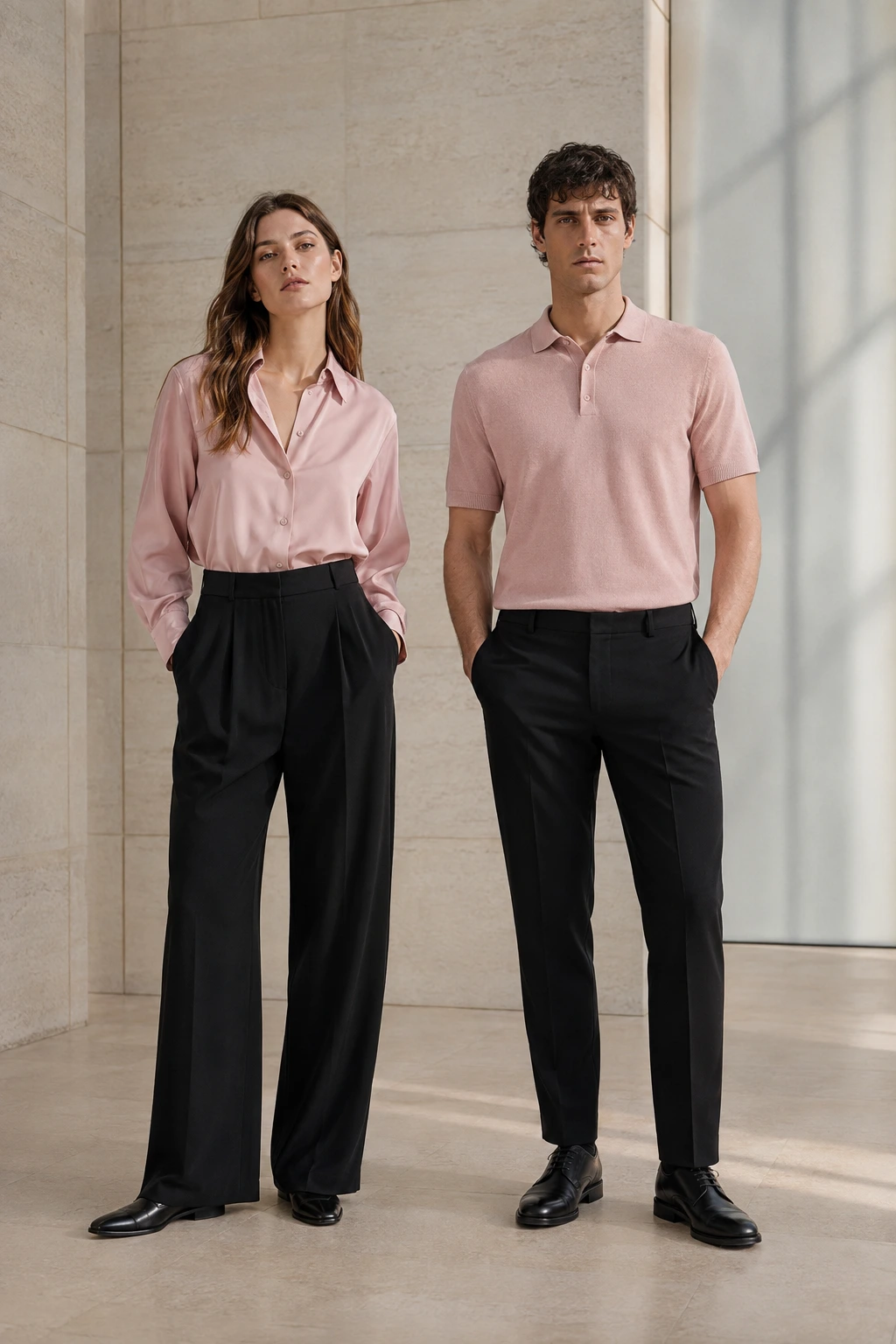
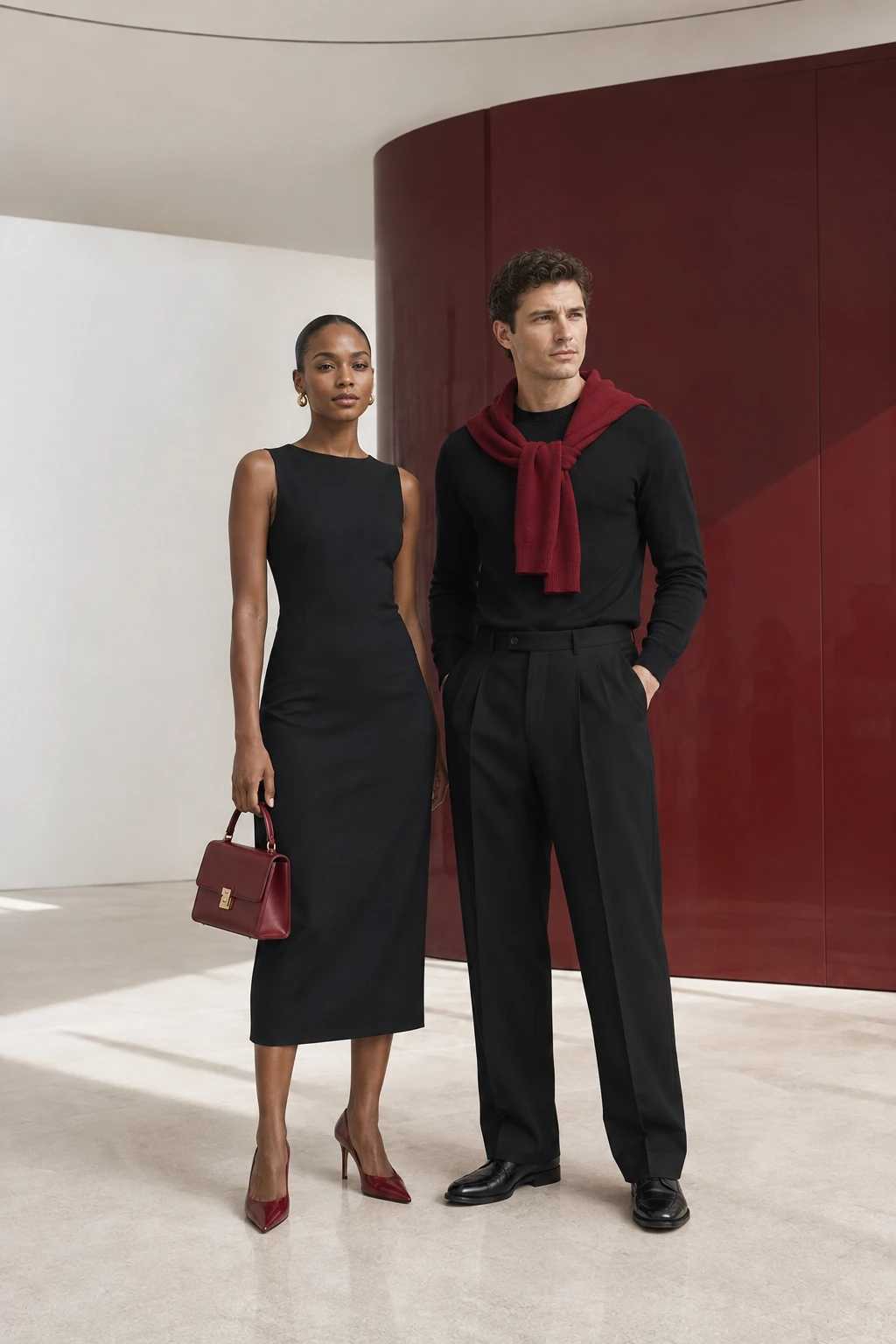
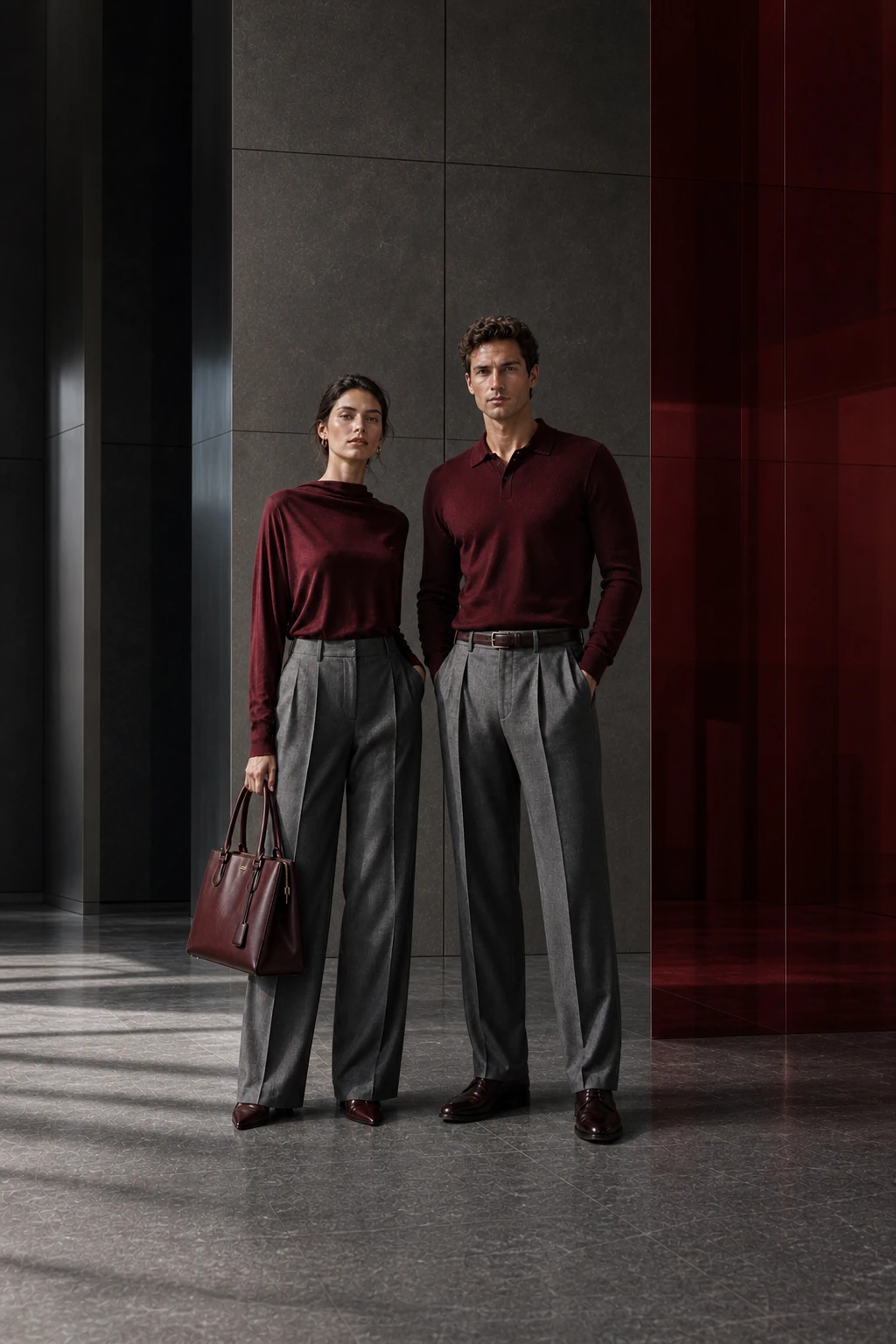
You can create focus with color, shape, or texture. Try burgundy knitwear with grey tailoring when you want a defined color accent. For a gentler contrast, combine a powder-pink top with black trousers. Both are specific combinations to test, not universal codes for power or friendliness.
If the jacket has a strong silhouette, keep the rest simple for your first trial. If you choose a bright top, repeat a quiet supporting color in your shoes or bag. You can add more complexity later, once you know which detail you want people to notice.
Three ways to translate intention into clothes
For a meeting, start with familiar trousers, a clean shirt or knit, and a jacket appropriate to the room. Check the condition of the cuffs, shoes, and fastening. Small maintenance tasks can make the outfit feel finished without changing its character.
For a presentation, rehearse in your outfit. Make sure you can gesture and that any microphone or equipment works with the neckline and layers. Choose pockets or a bag that hold what you need without overfilling them.
For a social occasion, use a comfortable base and add one personal detail: a red bag, a textured knit, a favorite earring, or a distinctive shoe. The detail can be quiet. You are choosing something you enjoy, not performing someone else’s idea of confidence.
A five-minute check before you leave
Lay out the entire outfit, including socks, shoes, and outerwear. Check for stains, creases that bother you, and any missing fastening. Look once at the overall proportions, then stop editing individual details unless something is uncomfortable.
After the occasion, note what worked. A familiar, reliable outfit can become a useful repeat option. Dressing with confidence is a practice of preparation and personal choice; your clothes do not need to prove your worth or make you look like someone else.