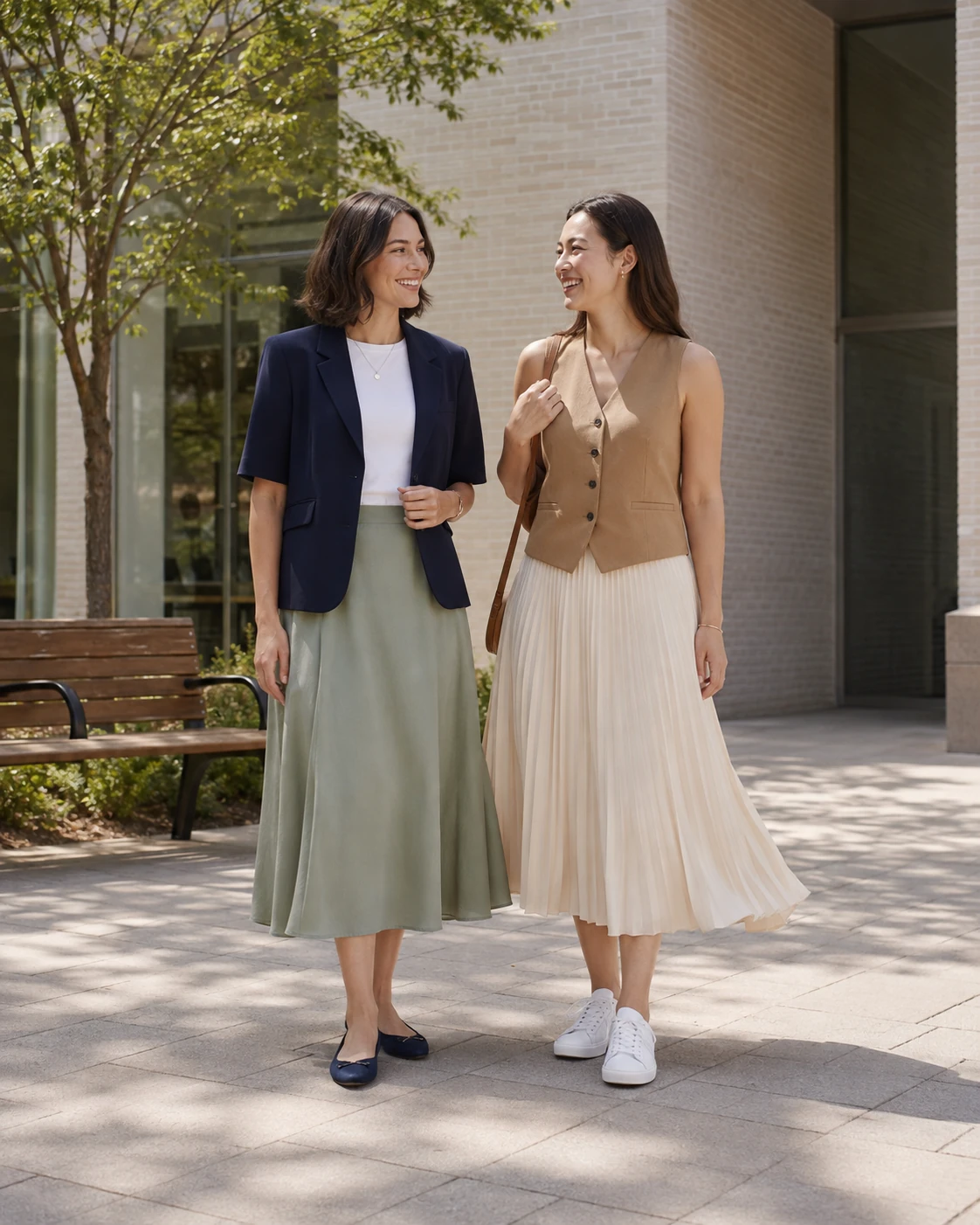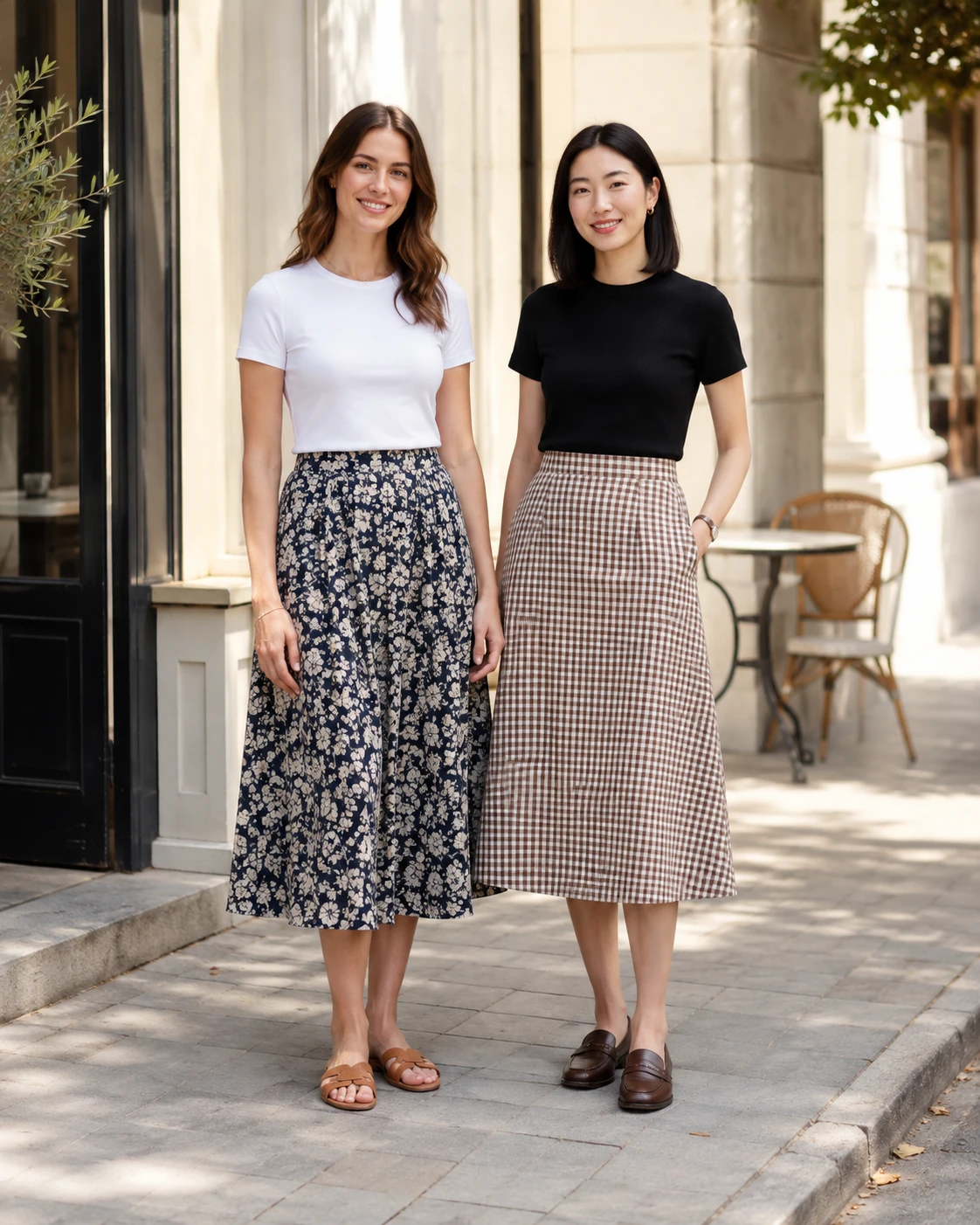
Long skirt + short top: make the waist break clear
Start with a skirt that finishes around the ankle and a top that ends near its waistband. The top can be waist-length rather than cropped enough to expose skin. You are choosing the point where the two garments meet.
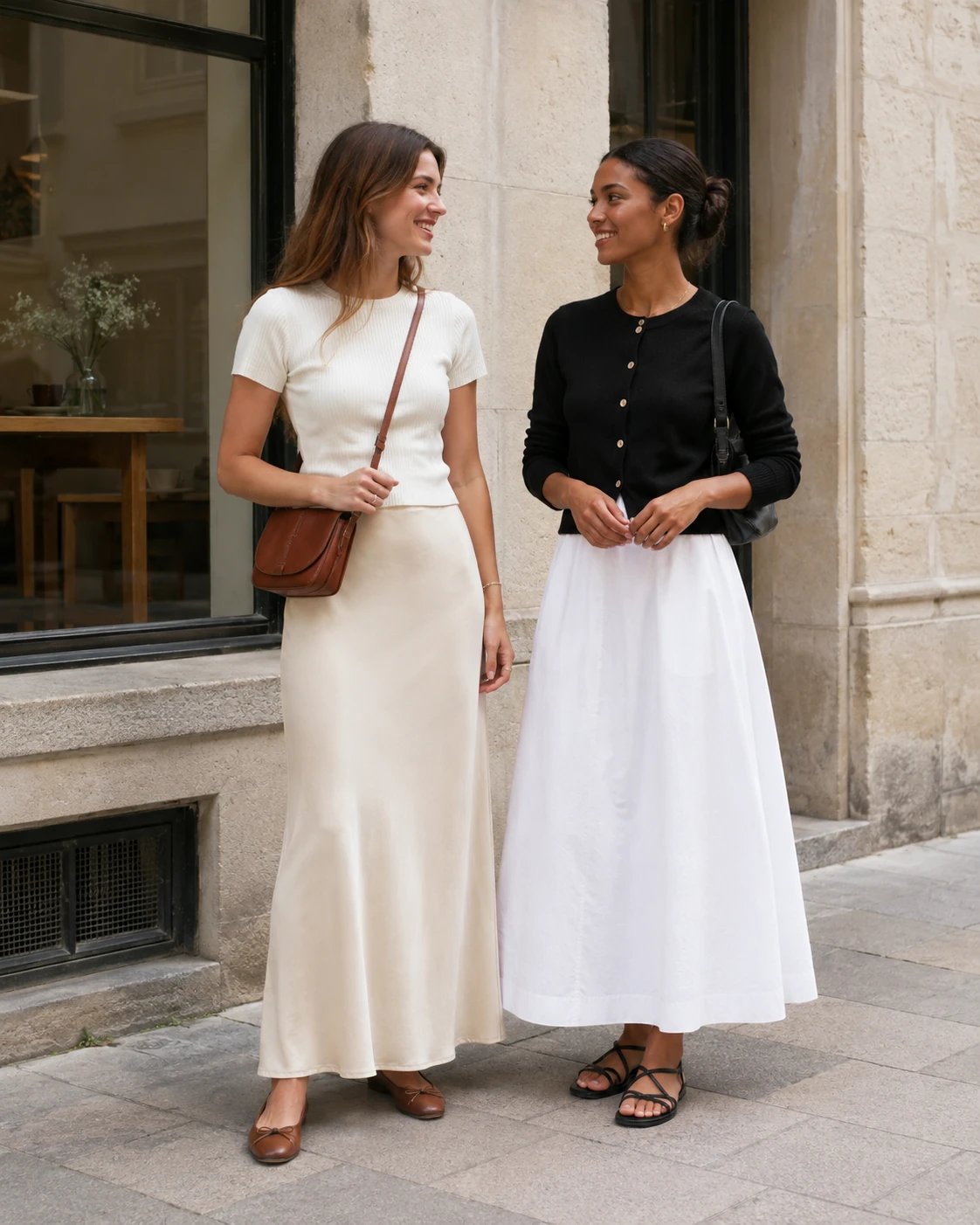
Try a cream bias-cut skirt with an ivory rib-knit top and brown flats. For a crisper contrast, pair a white maxi skirt with a black waist-length cardigan. If the top feels bulky, try a thinner fabric before deciding that the proportion is wrong.
Short skirt + long top: balance coverage
A mini skirt with a longer sweater or shirt creates a different distribution of coverage. Let enough of the skirt remain visible that the layers are easy to read, unless an intentionally concealed hem is the look you want.
Try a black A-line mini with a relaxed oatmeal sweater and loafers, or a denim mini with a pale-blue longline shirt and ankle boots. A side slit in the top can help the fabric move rather than bunch around the hips.
Which should I choose today?
Start with movement and the setting. Sit, take a normal step, and check the skirt length with your actual shoes. If you want to emphasize the waist without tucking, the first formula is a straightforward option. If you prefer more coverage through the upper body, try the second.
Keep the colors similar while comparing the proportions. Changing a skirt length, top volume, and color contrast at once makes it harder to tell which decision you prefer.
Before replacing a garment, adjust one detail
Fold a sweater hem inward temporarily, try a partial tuck, or swap a heavy shirt for a softer one. Check that any tuck stays comfortable when seated. These small changes can clarify the meeting point between garments without buying another top.
There is no compulsory skirt-to-top ratio. Use the two illustrated formulas as starting points, then keep the version that works with your clothes and plans.