First, look at how each garment behaves
Hang the skirt and top separately. Does the fabric collapse into folds or hold an outline of its own? Look at seams, pleats, thickness, and the waistband. A loose cotton shirt can be more structured than a close-fitting fine knit.
This comparison helps you avoid confusing “soft” with “casual” and “structured” with “formal.” A fluid skirt can be dressed up; a shaped denim skirt can be entirely relaxed.
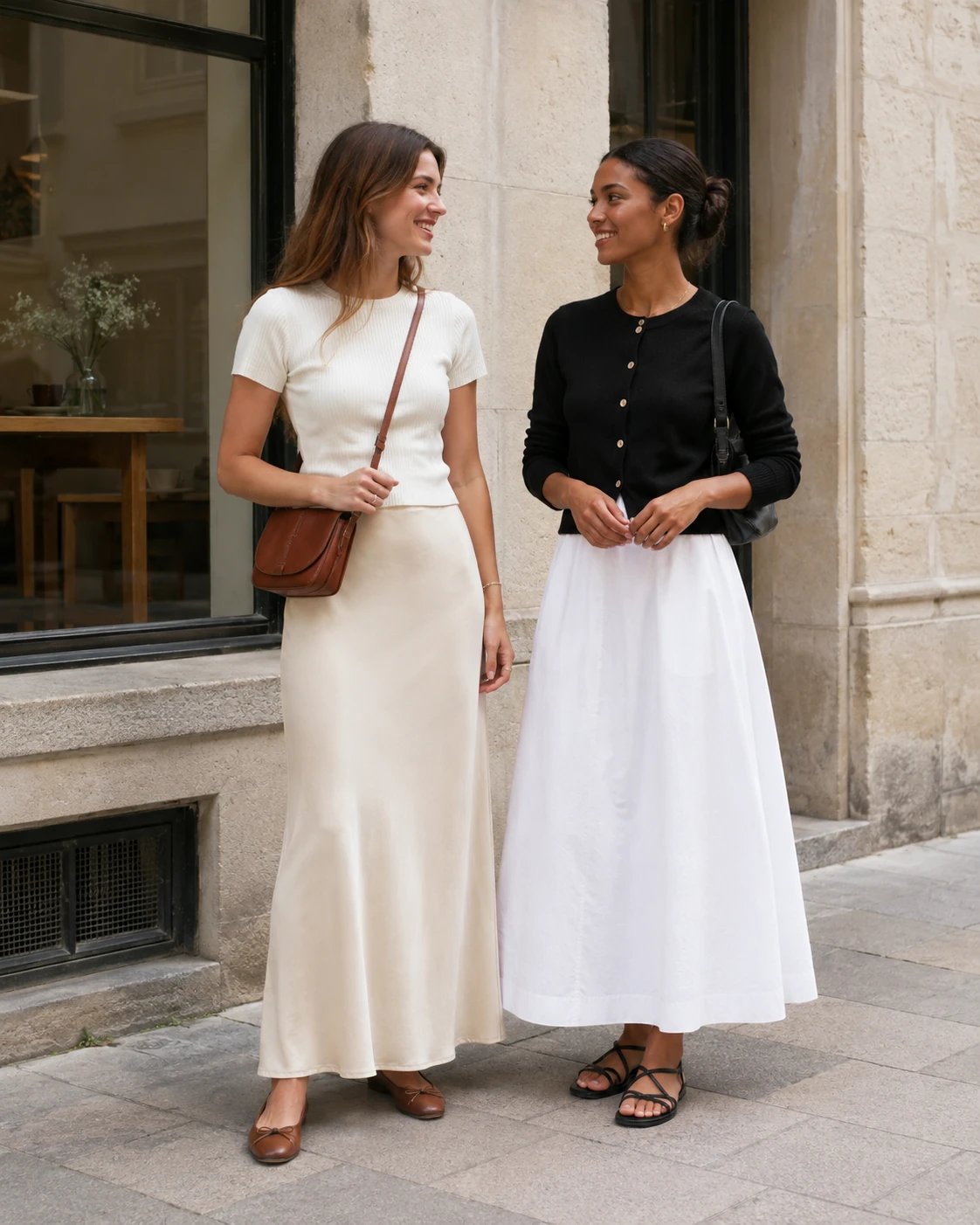
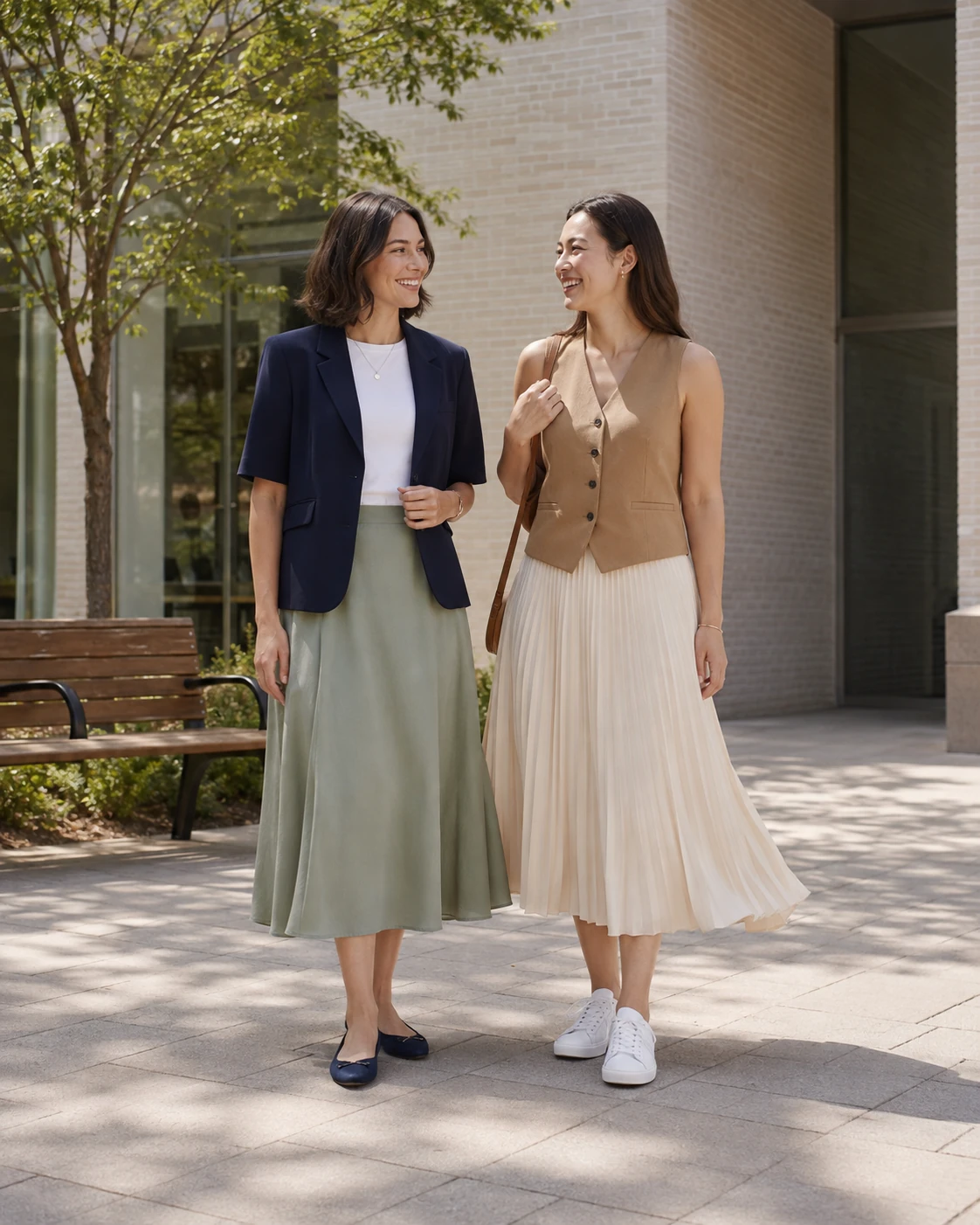
Soft skirt + structured top
Try a flowing midi skirt with a crisp cotton shirt or a waist-length tailored vest. Let the skirt supply movement while the top gives the outfit a clear edge. Keep the shirt hem or tuck intentional so it does not collect in a thick roll at the waist.
If the top feels too rigid beside the skirt, open the neckline slightly or choose a less angular sleeve. Keep the same skirt while testing the change so you can see what the top contributes.
Structured skirt + soft top
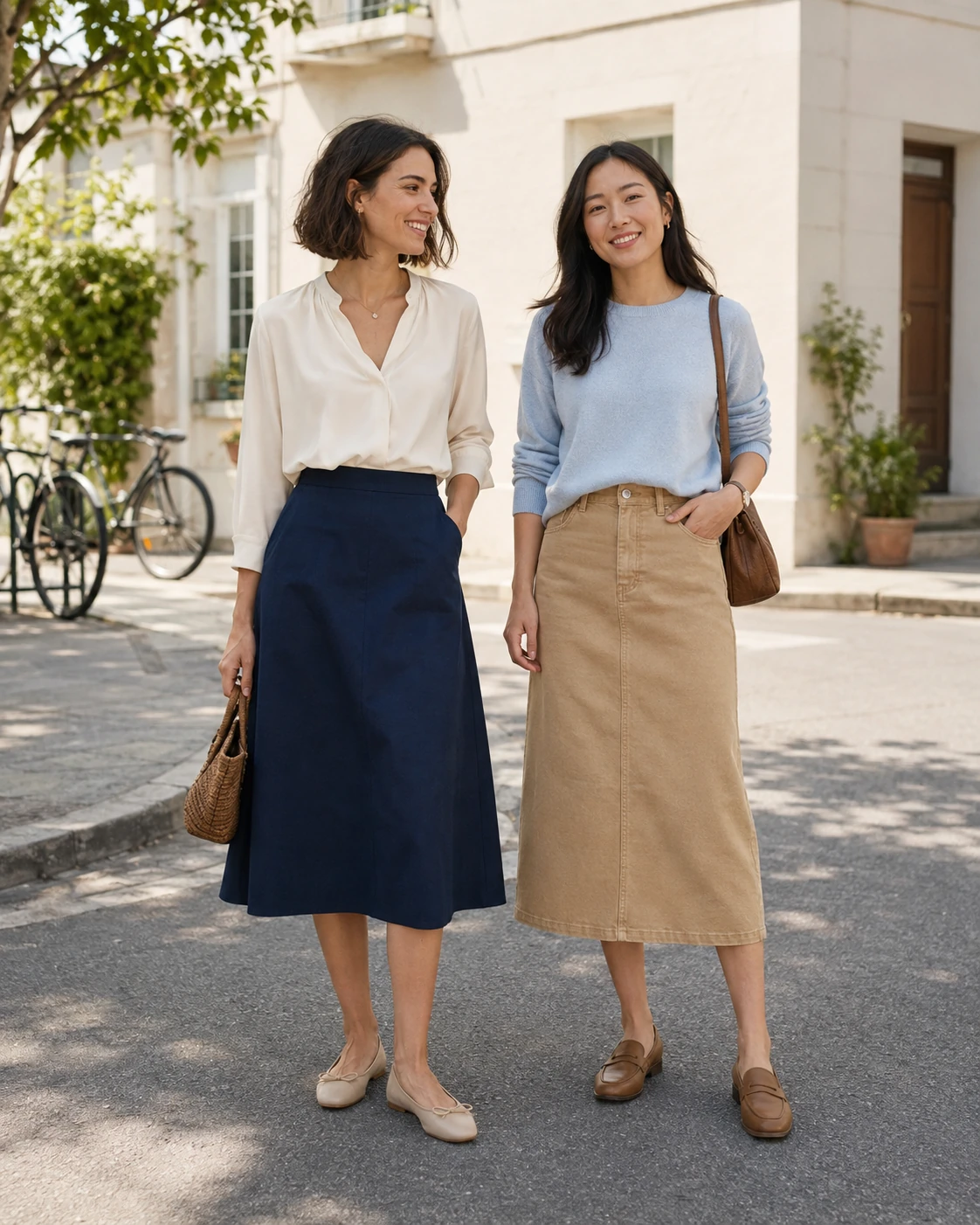
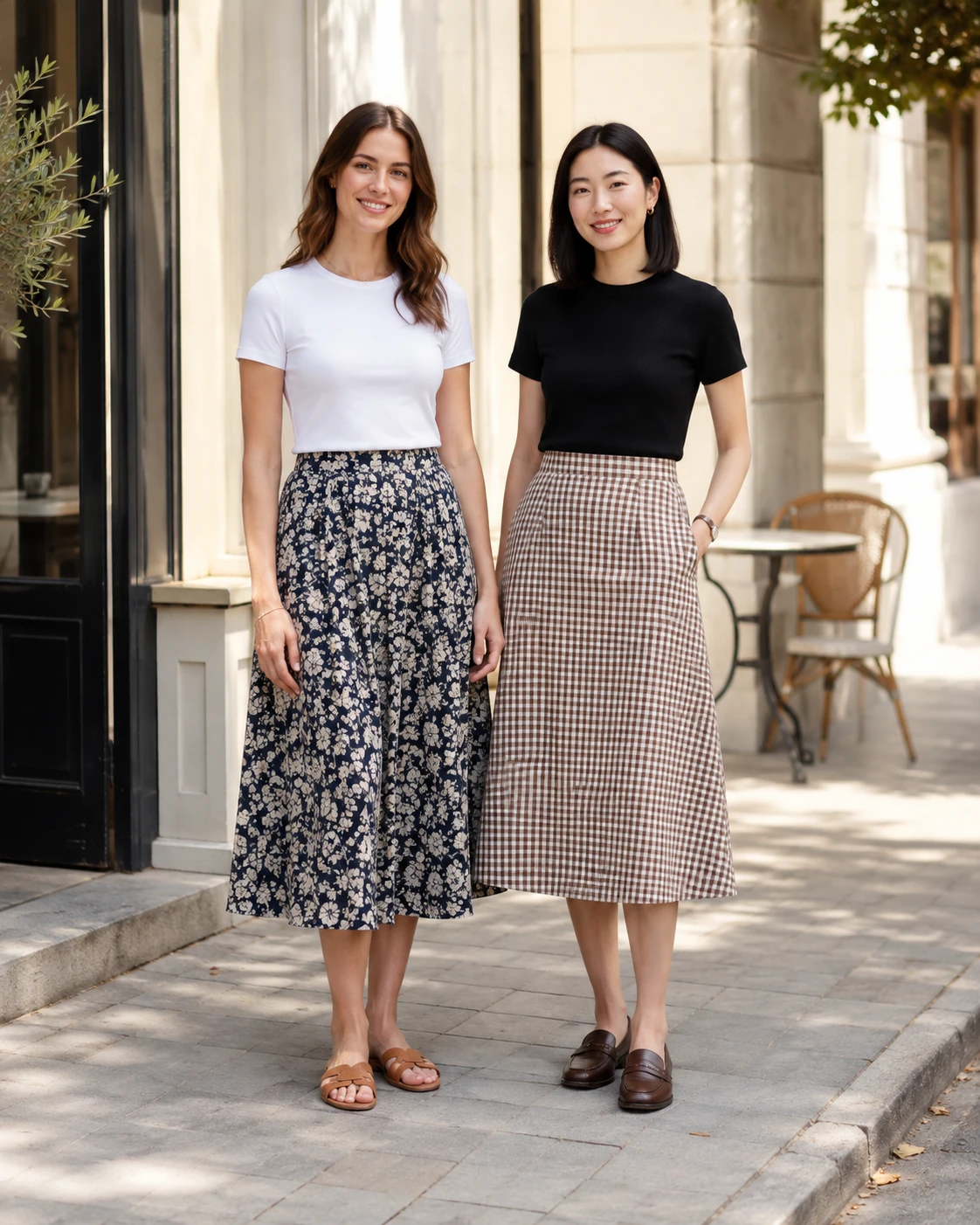
Try an A-line cotton skirt with a fine knit or a shaped skirt with a fluid blouse. Let the skirt’s outline remain visible instead of covering it with another heavily constructed piece for your first experiment.
A soft top does not have to cling. Choose enough room to move and check whether the fabric drapes smoothly over the waistband. If a full tuck bunches, use a lighter top or wear a shorter length outside.
Choose the garment you want to lead
If you like the way your skirt moves, use the first formula to frame it. If you like its pleats or sculpted outline, use the second to give that shape space. Keep accessories uncomplicated while comparing the two.
Walk and sit before deciding. The outfit needs to work when the fabric moves, not only in a still photograph. You can also combine two soft or two structured pieces deliberately; these contrasting formulas are simply useful starting points.